%20(1)%20(1).png)
Read more
Unmanned Systems in 2026: NATO Trends Redefining ISR and Border Control
Unmanned systems have evolved from a niche innovation into an essential element of NATO defense capability planning.
Version 1.0.0
January 2026
Published
.jpg)
2025 was the year unmanned systems shifted from being a niche innovation to becoming essential to capability planning across NATO nations. From large remotely piloted aircraft to swarms of smaller tactical drones, allied defense plans have made one thing clear: persistent airborne surveillance and distributed sensing are critical to sovereign defense strategies.
Geopolitically, 2025 was defined by instability, deterrence, and the need for readiness at scale. NATO nations increasingly prioritised unmanned technologies that can be deployed quickly, operated in multiple contexts, and be integrated into existing force structures. These shift plays directly to Alpha Unmanned Systems' strengths as a specialist manufacturer of unmanned tactical surveillance helicopters.
Surveillance and reconnaissance platforms with persistent hovering, low-speed loitering capabilities and flexible payloads gained higher priority in procurement agendas for military, border control, and homeland security forces.
Across the alliance, investment signals have been strong. The United States Department of War accelerated its push toward large-scale adoption of unmanned systems, with the U.S. Army outlining ambitions to field thousands of tactical UAVs as standard equipment at the unit level.
In Europe, Germany emerged as one of the most ambitious investors in uncrewed capabilities, signalling a dramatic expansion of its UAV inventory. Similar trajectories were visible in the United Kingdom and across NATO's eastern and southern flanks, where faster adoption of ISR-focused unmanned platforms were prioritised.
The A900: Mission-proven ISTAR capabilities
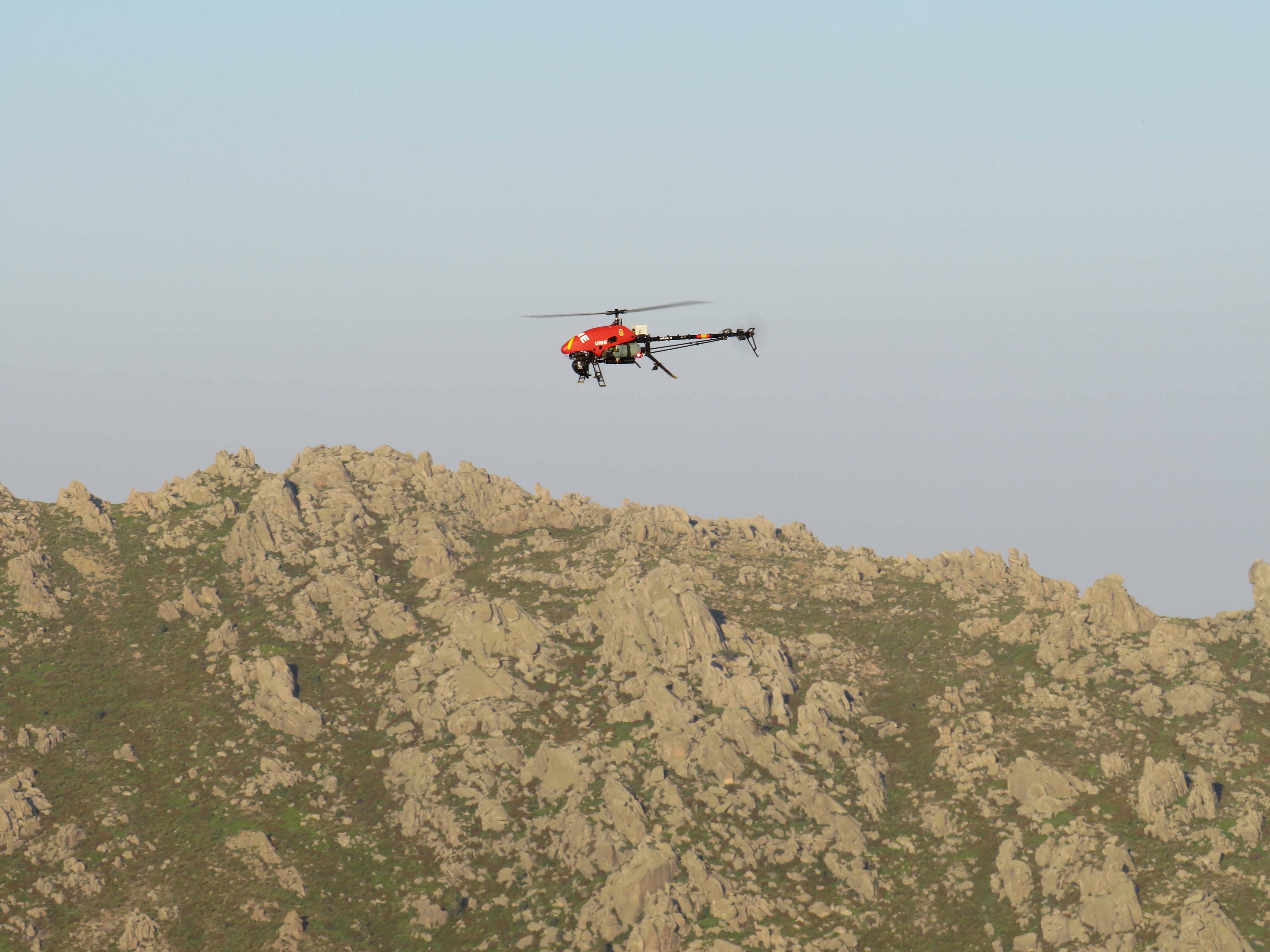
Against this backdrop, the A900 UAV helicopter continues to demonstrate why unmanned rotary-wing platforms are uniquely suited to modern ISTAR and border surveillance missions. In 2025, the A900 was actively deployed across 3 continents, supporting a broad range of surveillance operations in both land and maritime domains.
Its strength lies in a unique combination of attributes increasingly valued by defense users: a flexible flight envelope, complete autonomy, extended mission range, and the ability to operate from confined or unprepared locations.
Unlike fixed-wing systems, the A900's hover and low-speed loiter capabilities enable persistent observation, while its endurance and payload capacity support the integration of advanced EO/IR cameras or mission-specific sensors.
Equally important is its small logistical footprint. The A900 can be transported, deployed, and operated in minutes without the complex infrastructure associated with larger unmanned platforms, making it particularly suited to maritime surveillance, border control, and expeditionary ISR missions where speed of deployment is critical.
What this meant for Alpha Unmanned Systems in 2025
For Alpha Unmanned Systems, 2025 was a year of momentum. We conducted many demonstration flights, deepened engagements with defense and government agencies, showcased our technology at key industry events, and made significant R&D advancements to improve interoperability, autonomy, reliability and sensor integration.
At the same time, 2025 was a frank reminder of some of the challenges faced by smaller innovators operating in the defense sector. Defense procurement decision-making remains slow. Even where operational demand is strong, access to meaningful financial support to scale manufacturing continues to constrain how smaller companies can truly expand production capacity.
Looking ahead to 2026
Despite these challenges, the outlook for 2026 is extremely positive. NATO's focus on unmanned surveillance technologies will only intensify, driven by operational lessons, growing geopolitical threats, and the need for lower risk, cost-effective force multiplication.
For Alpha, this means supporting our current customers with a broader range of missions, converting proof-of-concepts into operational deployments, and further establishing the A900 unmanned helicopter as a trusted, mission-proven ISR platform.


.svg)


.png)
