%20(1)%20(1).png)
Read more
UAV Helicopters: A Game-Changer for Tactical Operations
Unmanned aerial vehicles (UAVs) are transforming modern military and tactical missions. These systems are cost-effective, safer and more versatile than traditional manned helicopters.
Version 1.0.0
January 2026
Published
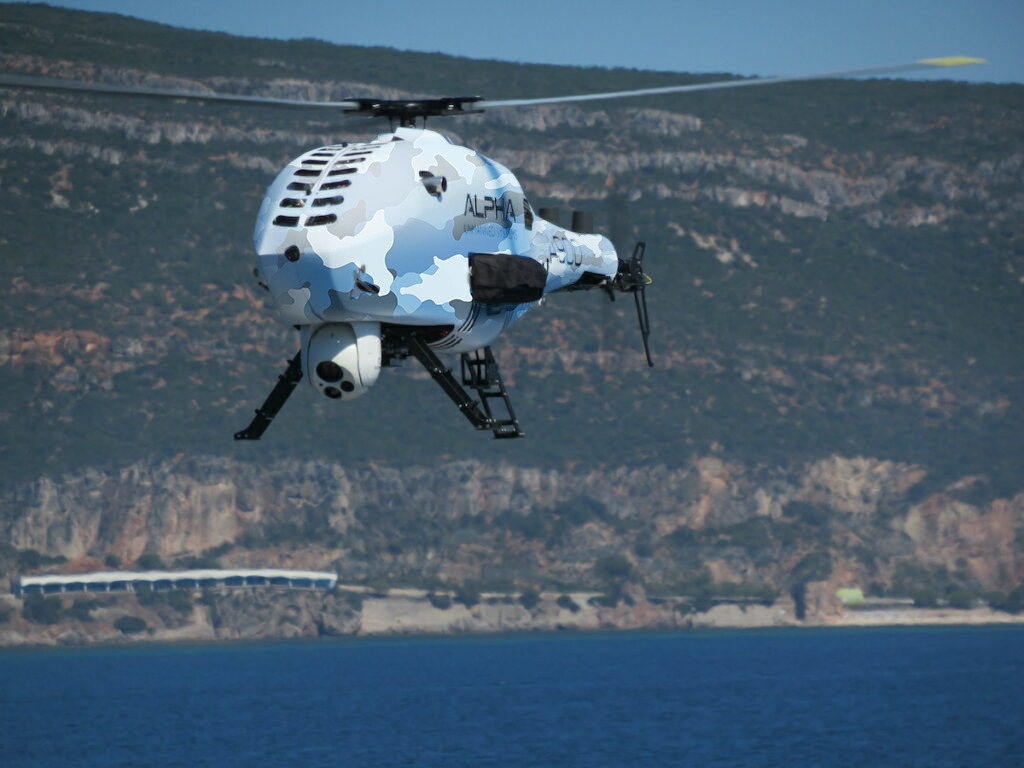
The use of unmanned aerial vehicles (UAVs) is transforming modern military and tactical missions. These systems are not only cost-effective, but also safer and more versatile than traditional manned helicopters.
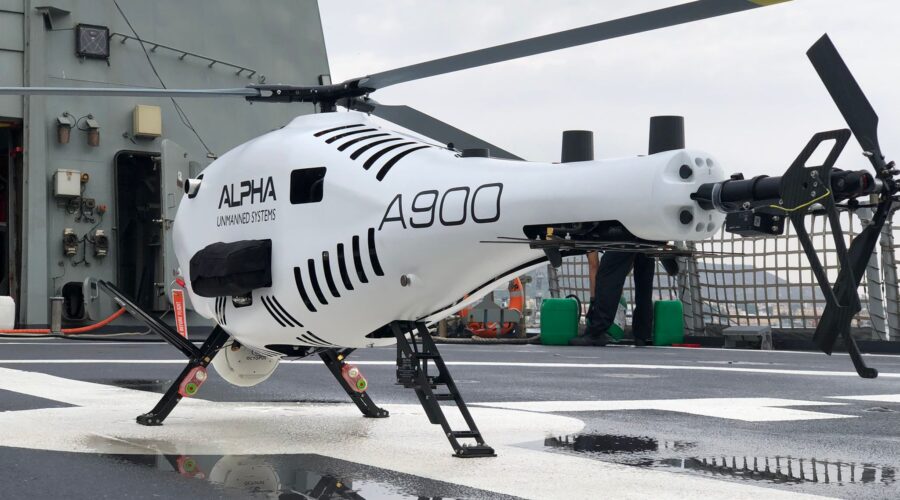
Among these innovations, small fuel-powered UAV helicopter drones, such as Alpha’s A900, stand out as a reliable and flexible alternative, particularly for Intelligence, Surveillance, Target Identification, and Reconnaissance (ISTAR) missions. Whether in military campaigns, border control missions, or maritime operations aboard smaller vessels, UAV helicopters provide a unique combination of performance, efficiency, and adaptability.
Let’s explore why these UAV systems are becoming a preferred choice for modern tactical operations.
The Cost and Complexity of Traditional Helicopters
Full-size manned helicopters, while effective, come with significant financial and operational burdens. Their high cost of operation—including fuel, maintenance, and crew salaries—place a strain on military budgets.
Beyond the initial financial outlay, manned helicopters require a complex logistical setup involving highly trained personnel, advanced maintenance facilities, and extensive pre-flight planning. Additionally, these manned operations often expose crew members to considerable risk, especially in contested or high-stakes environments.
In contrast, UAV helicopters eliminate the need for an onboard crew, drastically reducing personnel risk and operational complexity. A small, fuel-powered UAV can be deployed and operated by two trained professionals, reducing the logistical footprint to a minimum.
Why Fuel-Powered UAV Helicopter Drones Excel
Fuel-powered UAV helicopter drones offer several advantages that make them uniquely suited for tactical ISTAR missions:
1. Mission Flexibility
Modern UAV helicopters can be equipped with diverse payloads, making them suitable for a wide range of applications, including:
Intelligence, Surveillance, and Reconnaissance (ISR): With high-end cameras and sensors, these UAVs can provide real-time data critical for tactical decision-making.
Target Identification: Advanced imaging and recognition systems enhance overall situational awareness.
Border Control and Maritime Operations: On board smaller vessels, their compact design and vertical take-off and landing (VTOL) capabilities make them ideal for operations where space is limited and conditions are often challenging.
2. Cost-Effectiveness
Compared to manned helicopters, fuel-powered UAVs are significantly more economical. Their smaller size and efficient fuel consumption drastically reduce operating costs, while simplified maintenance schedules further enhance affordability. This makes the technology an attractive option for military units or agencies with constrained budgets.
3. Reduced Risk to Personnel
With no onboard crew, UAV helicopters eliminate direct human exposure to hazardous environments. Whether deployed in combat zones or during high-risk maritime missions, they provide a safer alternative for critical operations.
4. Simple Logistical Footprint
UAV helicopters require minimal setup and can be deployed rapidly. Two trained operators can handle all aspects of the mission, making them practical for operations that require a quick, on-the-fly response. This simplicity of operation is especially valuable for smaller tactical units or vessels with reduced personnel and deck space.
UAV Interoperability: The Future of Manned-Unmanned Missions
One of the key advantages of UAV helicopters is their ease of interoperability with manned systems. By integrating unmanned UAVs into traditional manned missions, operators can truly enhance the efficiency and effectiveness of their campaigns. This concept, known as manned-unmanned teaming (MUM-T), allows UAVs to complement manned helicopters by taking on high-risk or repetitive tasks, such as extended surveillance or reconnaissance.
For example, a manned helicopter can focus on critical mission objectives while a UAV helicopter provides real-time ISR support, extending the mission’s reach and capability without putting personnel at risk. Furthermore, UAV helicopters can act as force multipliers, by sharing critical data and real-time imagery, so manned helicopters can operate more strategically.
For a practical example of Manned-Unmanned Aerial coordination, check out our recent exercise with the Spanish Armed Forces, in collaboration with Airbus Helicopters.
Enhanced Communication and Navigation Integration
Small UAV helicopters are equipped with advanced communication systems that make them highly effective for naval and maritime coordinated operations. These rotary drones can integrate with critical onboard communication and navigation systems, providing operators with real-time connectivity and data. From transmitting high-resolution imagery to sharing live sensor data, UAV helicopters enhance situational awareness and improve tactical coordination.
An array of communication options available for UAVs provide reliable and direct links to command centers, ships, and other deployed assets. This capability is particularly valuable in maritime environments where maintaining robust communication is essential for mission success. Helicopter UAVs can also serve as airborne relays, extending communication ranges to guarantee an uninterrupted data flow even in challenging conditions.
Rotary UAV Applications in Maritime Operations
In maritime environments, where deck space is often at a premium, small fuel-powered UAV helicopters really stand out. Their VTOL capabilities and compact design make them highly effective for:
- Border Control: Monitoring and intercepting unauthorized vessels or activities.
- Search and Rescue: Providing rapid aerial support to locate individuals or vessels in distress.
- Maritime Reconnaissance: Gathering critical intelligence over vast ocean areas with minimal resources.
Their ability to operate from smaller vessels enhances the capabilities of naval and coast guard units, giving them the flexibility to perform missions traditionally requiring larger, manned helicopter platforms. By integrating UAVs with shipborne systems, naval operators can achieve enhanced coordination for faster and more informed decision-making.
The Future of Tactical Surveillance with UAV Helicopters
As military and tactical aerial operations evolve, the demand for cost-effective, reliable, and flexible solutions continues to grow. Small, fuel-powered UAV helicopter drones are meeting this demand by offering unparalleled flexibility, reduced risks, and lower operational costs.
Their ability to perform a variety of ISTAR missions while integrating seamlessly with manned systems positions them as an essential asset for modern tactical operations. Whether operating in challenging maritime conditions or high-stakes combat zones, these UAV systems offer a robust and adaptable solution for today’s complex aerial mission requirements.

.jpg)
.svg)


.png)
